
Start with what the car actually does
A car that won't start falls into one of a few patterns: nothing happens at all, you get a clicking noise, the engine turns over but won't start, or it fires and dies straight away. Each pattern points at a different group of causes, so note exactly what happens before you call anyone — it tells the mechanic more than anything else.
Also note whether it happens every time or only some mornings, whether the dash lights come on at full brightness, and whether anything changed recently — a new battery, a bump, a wet weekend, or the car sitting unused. A car that won't turn over after two weeks parked is a very different job to one that died at the shops.
Nothing at all happens
No dash lights, no click, no crank. That is almost always a flat or dead battery, or a corroded terminal. Check the terminals are tight and clean — a bit of white powder on the posts can be enough to stop the car cold.
If the lights are bright and there is still nothing when you turn the key, suspect the starter motor, the ignition switch or a neutral safety switch on an automatic. Try shifting into neutral and starting again — if it fires up, the safety switch is the culprit.
One loud click, or rapid clicking
A car not starting with a rapid machine-gun clicking noise is a battery with just enough charge to pull the solenoid in but not enough to spin the starter. A jump start will usually get you going, but the battery is on borrowed time — have it and the charging system tested before it strands you again.
A single heavy clunk with good lights points at the starter motor itself. Sometimes the starter has a flat spot and will work after a gentle tap while someone turns the key, but that is a get-you-home trick, not a repair.
It turns over but won't start
If the engine turns over at normal speed but never fires, the battery is fine — the engine is missing fuel, spark, or the signal that tells it to make them. Common causes are a failed crank angle sensor, a dead fuel pump, a blocked filter, a snapped timing belt, or an immobiliser that does not recognise the key.
If it cranks fast and fires briefly then dies, that pattern points strongly at fuel delivery or the immobiliser. A car that cranks noticeably faster than normal with a light, empty sound can mean the timing belt has gone — stop cranking, because on many engines every extra turn risks valve damage.
Has power but won't start
Dash lights on, radio works, headlights bright — but the car won't turn over. People often rule the battery out at this point, but a battery can run the accessories and still not have enough grunt to crank an engine. A proper load test is the only way to know.
If the battery genuinely tests fine, the suspects are the starter motor, the starter relay, the ignition switch, or wiring and earth connections between them. On push-button cars, a flat key-fob battery can also stop the start button from working — try holding the fob against the button.
Starts, then dies immediately
- Immobiliser or key transponder fault
- Fuel pump losing pressure
- Idle air control or throttle body fault
- Major vacuum leak
Before you call anyone
- Confirm the car is in park or neutral, and try neutral on an auto
- Check the dash immobiliser light — a flashing key symbol means the car will crank but never run
- Try the spare key
- Look for a fuel gauge that has failed and reads wrong
- Note exactly what you hear — it tells the mechanic more than anything else
We come to the car
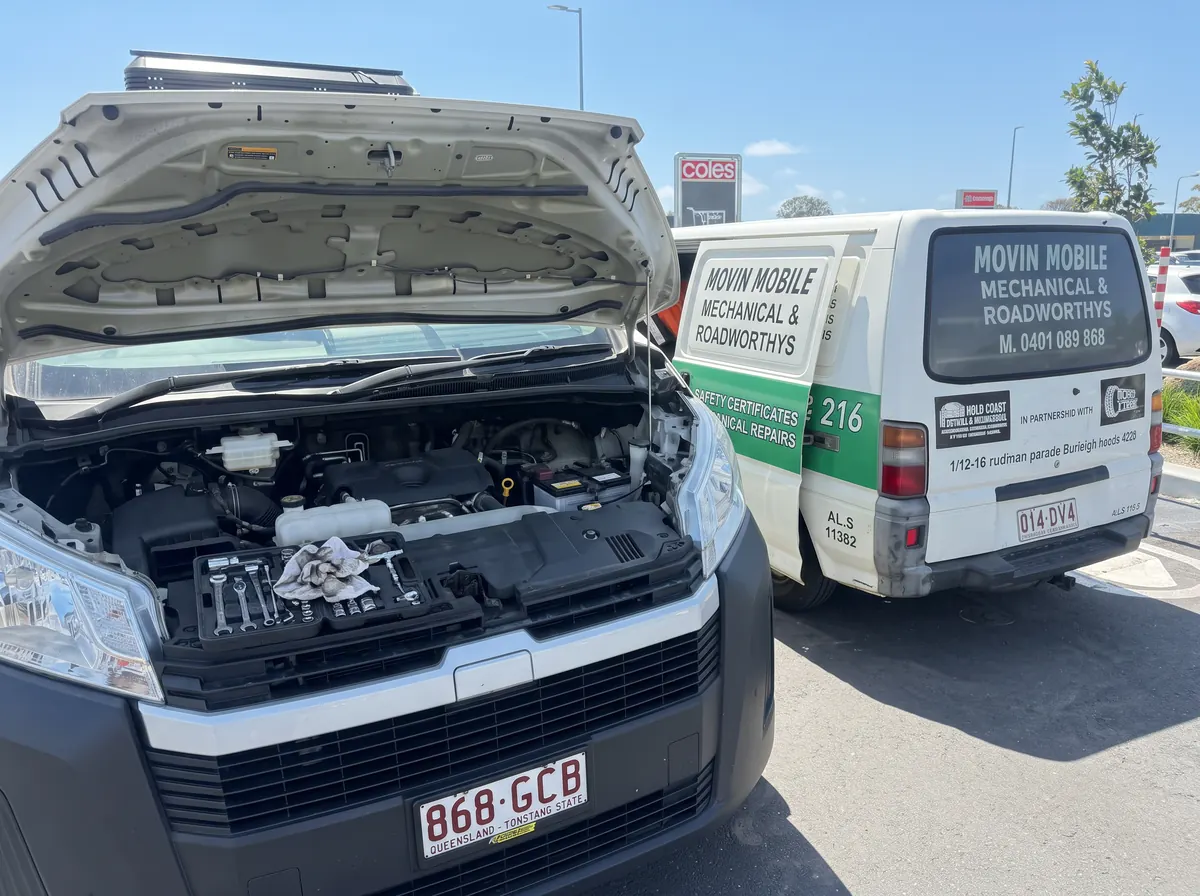
A car that will not start does not need to be towed anywhere first. We bring the battery tester, scan tool and common parts to your address anywhere on the Gold Coast or Tweed Heads, diagnose it on the spot and in most cases have you running the same visit.
The callout is $150, which covers the first hour on site. If we genuinely cannot help at all, you do not pay. If we diagnose and identify the fault, the $150 applies even if the repair itself needs a specialist or a workshop. We run 6am to 6pm, seven days a week — call 0434 728 765 and describe the noise it makes.
Frequently asked questions
My car has power but won't start — is it the battery?
Maybe. A battery can run the lights and radio and still be too weak to crank the engine, so it can't be ruled out without a load test. If the battery tests fine, the starter motor, relay, ignition switch or wiring are the next suspects.
What does rapid clicking when I turn the key mean?
Rapid clicking is usually a battery with enough charge to engage the starter solenoid but not enough to spin the engine. A jump start may get you going, but have the battery and charging system tested before it leaves you stranded again.
The engine turns over but won't start — what now?
The battery is fine; the engine is missing fuel, spark or the signal to make them. Common causes are a crank angle sensor, fuel pump, or an immobiliser fault. If it cranks unusually fast and light, stop cranking — a snapped timing belt can bend valves on many engines.
Can a mobile mechanic fix a no-start at my house?
In most cases, yes. We bring the battery tester, scan tool and common parts to you across the Gold Coast and Tweed Heads, and most no-starts are diagnosed and fixed on the spot. The $150 callout covers the first hour.
Broken down right now? We come to you on the roadside, 7 days.