
What turns the ABS light on
- A failed wheel speed sensor — the most common cause by a long way
- A damaged sensor wire or reluctor ring, usually from road debris or corrosion
- Low brake fluid or air in the system after brake work
- A faulty ABS module or pump motor, often after years of heat cycling
- A flat or failing battery causing low voltage faults across the system
- Blown ABS fuse or a corroded connector at the wheel hub
How we diagnose an ABS fault
We scan the ABS module directly rather than reading generic engine codes, because the fault almost always lives in its own control unit. That gives us the exact circuit — front left sensor, rear right, pump motor, valve block — instead of a guess.
From there we test live data while the wheel is turned, so we can see whether a sensor is producing a clean signal or dropping out. A sensor that reads fine at rest and fails at 40km/h is common, and only live testing catches it.
Wiring is checked at the same time. On Gold Coast cars, salt air and coastal driving take a heavy toll on sensor plugs near the hubs, and a cleaned or repaired connector often fixes what looks like a dead sensor.
ABS repair costs on the Gold Coast
A wheel speed sensor replacement typically runs $220 to $450 fitted, depending on the vehicle and whether the sensor comes out cleanly — seized sensors in an alloy hub take longer. Diagnosis is included when we do the repair.
Wiring repairs and connector work sit at the lower end, often under $250. A full ABS module replacement is the expensive end at $900 and up, which is exactly why we test properly before condemning one. Plenty of modules get replaced when a $60 sensor was the real fault.
Some modules can be repaired or refurbished rather than replaced, which is worth considering on older vehicles where a new unit costs more than the car is worth. We will tell you when that is the sensible route.
Is it safe to drive with the ABS light on?
For short distances, usually yes — your normal brakes are unaffected. What you lose is anti-lock assistance, so in an emergency stop or on a wet road the wheels can lock and you lose steering control. Traction and stability control are commonly disabled at the same time.
If the ABS light and the red brake warning light are both on, stop driving. That combination points to a hydraulic or fluid pressure problem, not just an electronic one, and it needs looking at before the car moves again.
It will also fail a roadworthy inspection, so if you are selling or registering the car it has to be fixed either way.
We come to the car
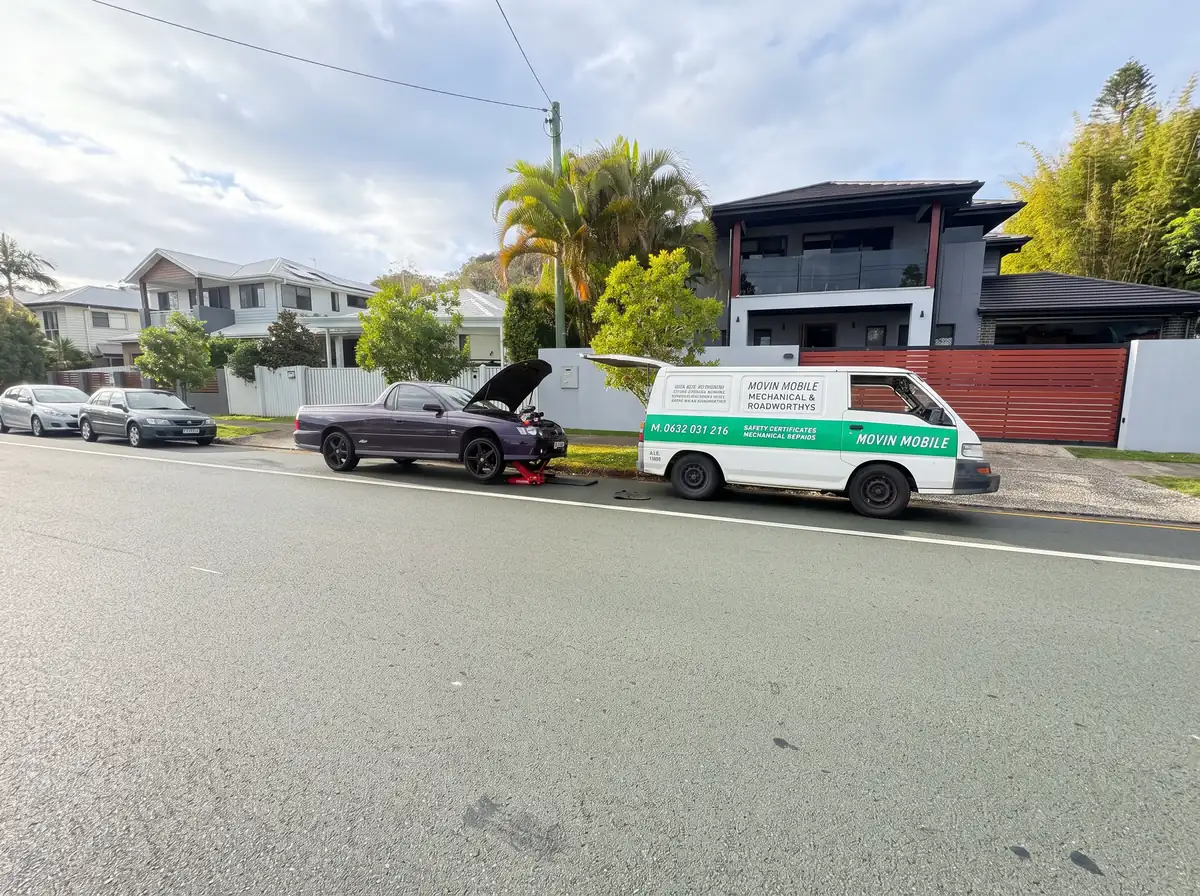
ABS work is well suited to mobile repair. The scan tool, the sensors and the tooling all travel, so most jobs are diagnosed and finished in your driveway or at your workplace between Coomera and Tweed Heads. No tow, no waiting for a workshop booking.
Where a job needs a hoist — a seized hub, a module that needs bench work — we take it into our Burleigh Heads workshop and tell you that up front, before any work starts.
Broken down right now? We come to you on the roadside, 7 days.